

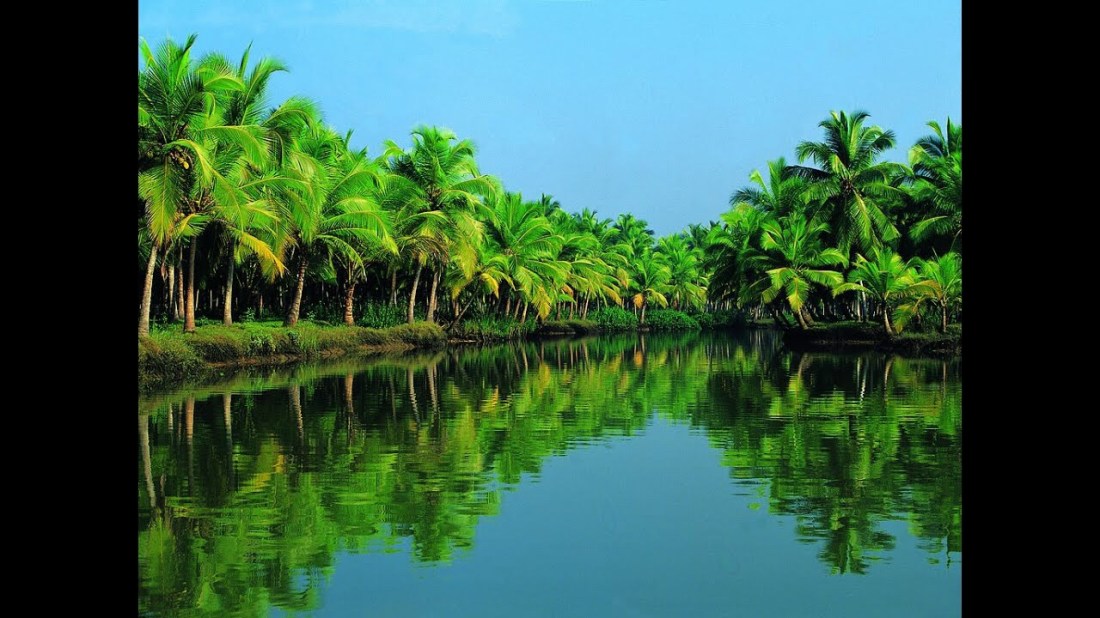
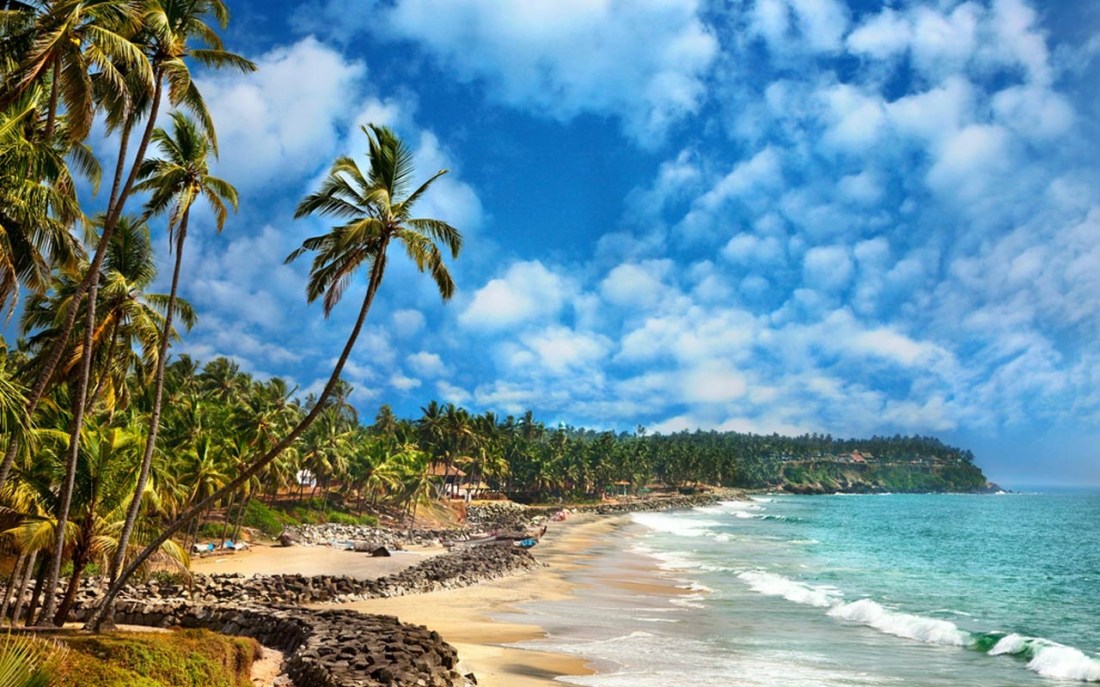
For many traveller’s , Kerala is South India’s most serenely beautiful state. This slender coastal strip is defined by its layered landscape: almost 600km of glorious Arabian Sea coast and beaches; a languid network of glistening backwaters; and the spice- and tea-covered hills of the Western Ghats, dotted with fiercely protected wildlife reserves and cool hill stations such as Munnar. Just setting foot on this swath of soul-soothing, palm-shaded green will slow your subcontinental stride to a blissed-out amble. Kerala is a world away from the frenzy of India’s elsewhere, its long, fascinating backstory illuminated by historically evocative cities like Kochi (Cochin) and Thiruvananthapuram (Trivandrum).Think swaying palm trees, crashing surf, coffee plantations, hill retreats, silent backwaters, rice paddies, beautiful national parks that are home to a host of wildlife and you’ve teleported yourself to Kerala.
One of the better known states of India, there’s a lot to pack in to a trip to Kerala. Known as God’s Own Country, Kerala in South India has a lot to offer: from yoga centres, to hill stations and tea plantations up in the Western Ghats (mountains), to national parks that are home to tigers and elephants, to palm fringed beaches. And then there are the Kerala Backwaters, which despite their overcrowding issues, still provide a serene backdrop to any Kerala experience – when experienced in the right way.
Kochi / Cochin
Kochi / Cochin (the town’s old name) is one of Kerala’s most popular tourism spots and transport hubs, and so the starting point for many travellers in Kerala. It’s possible to spend many a day wandering the old lanes of Fort Cochin between colonial houses, organic cafes, art galleries, churches and boutiques. Note that Cochin is quite separate (it is an island) from the mainland town of Ernakulam, where all major transport arrives and departs from.
Things to do in Kochi
Kathakali Performances – for many visitors, a Kathalkali performance is on their list – this is a chance to see traditional Keralan dance and music, complete with incredible makeup and costumes.
Exploring Fort Cochin – taking in its churches, museums and even Synagogues. As an old trading and naval outpost, over the last 600 years, Kochi has seen the arrival of many immigrants of different nationalities and religions – from Portuguese to Dutch, to British to Arabic traders. There’s an Indo-Portugese museum, a Dutch cemetery, as well as several beautiful churches to explore such as the Santa-Cruz basilica. There’s also a growing number of art galleries (often with cafe).
Shopping – there are plenty of artisan style shops in Fort Kochi, making it something of a shoppers paradise. Many shops sell organic toiletries and ayurveda products, and lovely Aambal is an eco clothing store which sells hand-woven, natural and handmade and recycled fashion.
Eating – There are plenty of cafes lining the streets of Fort Kochi, and if you’ve been on the road for a while, this is a good place to splurge on western treats aka good pizza and avocado wraps with a good latte. It does come at a price though. The local fare is much better priced, usually more delicious, and one gets bitten by the traditional Keralan Thali bug.
I hope you plan your next trip to god’s own country…..

 Measure the Earth with your feet!!
You must be logged in to post a comment.